That erased de Kooning drawing
All kinds of transference and all kinds of protestation . . . And more talk. Always more talk to be had and to be taken with.

Ripeness is all, whirl is king, and reality is several different kinds of tortured
All kinds of transference and all kinds of protestation . . . And more talk. Always more talk to be had and to be taken with.

well for instance, a very basic thing, how to have the character of J R -- who is not very bright, he’s not a genius, he’s not a brilliant boy, he’s just a little, fresh, innocent, greedy little boy, who thinks, How can you make this work? How can I get . . . but so he not start out -- and this has been a misunderstanding, often in reviews, calling him a little financial wizard -- really what happened in J R, he backs in to situations all the time -- in this essential thing, getting him off to a start, he has bought these bond issues, which have been long since defaulted, in other words, the company has borrowed money, which is what a bond is, then failed to, when it comes due, supposedly a bond issue comes due in 1990 and they don’t, now it’s 1999 and they still, they have never come through with it, they have never repaid, so the bond is pretty much worthless. So he’s been seeing these and buying them for ten cents on the dollar -- five cents, six cents -- there are these bond issues floating around, and he’s bought these mainly because it says a thousand up in the corner, and he’s getting it for only $70, and he thinks, “Gee, this is a $1000 bond!” and he’s getting it for seven cents on the dollar. And finally, when creditors close in, throw the company into bankruptcy -- because it’s been losing money all these years, and finally the creditors say, This has gone on long enough, they throw the company into bankruptcy -- any bondholders have first claim, the stock then is all washed out, and if you have owned stock in the company, you get nothing. But the bondholders then get their interest converted into stock, such as it is. So my problem was: how do I get this boy, who’s not brilliant, get him started with a company shell. So here is this Eagle Mills, a textile company, which has been in a state of semi-bankruptcy for years and just plodding along, and no one has ever bothered to call them into bankruptcy, and finally they do. And he’s got these bonds, and suddenly he’s a major stockholder, and a very important part of that is, having done this without really knowing what he was doing, and becoming a major stockholder, he now believes he did this out of his own brilliance, and very much what J R is about is him believing his own myth, and he reads something in the paper about these “downstate interests” who have closed in and taken over Eagle Mills and he thinks, “Wasn’t I brilliant?” And that was not what he had in mind, he didn’t know what he was doing, and so he constantly has these things where he backs into a situation, and then it turns out well for him, and he thinks, “Wasn’t I smart? Wasn’t I clever? Wasn’t I brilliant?” And this to me is very much America too: first, the chance element, but also the people of “limited” intelligence, shall we say, struggling around in this morass of capitalism, if you like, of investment, of nonproductive money-dealing, who prosper and produce nothing -- this is a very, very . . . J R is now almost 20 years old, I mean the book: this is what the record of the '80s became, lots of money floating around, producing nothing, and no one go on to it, even when I told them this is what’s coming, this whole idea . . . at least in the nineteenth century, in America, in the late nineteenth century -- there was corruption: in the government, in the railroads, bribes, all kinds of chicanery, and so forth -- but it produced railroads, it produced coal mines, it produced all kinds of things. Now this same spirit of buccaneer capitalism produces nothing; in fact, by now what it has produced is the collapse of General Motors, the collapse of IBM, everything collapsing because the money is what was going on. This is what J R is about, the nonproductive use of capitalism, where money is the only . . . in fact he invented junk bonds with his whole penny-stock fantasies. Like Cassandra [chuckling], I told them, and they wouldn’t believe me
Consider the truism: every life, if cast in appropriate light, is miraculous or amazing or more than the sum of its parts - assume it could be falsified, was the type of proposition susceptible to, capable of, being falsified. Wouldn’t it take more energy than fission and the law of large numbers contain in their collective fantastic amplitude in order to unstring and disentangle the taut neatness of the assumption that lets that truism hang together?


Every common path trends toward unique, and every idiosyncratic particle runs into a shared fate. The spastic restless becomes inert stricken quiet.


Take the stuffing out of however many bold young hype man visionaries that the 19th century midwifed into being. Against these fragments obsession lays down a marker. All say the same thing in different terms, carved out of private vocabularies they would have calcify into stone: I am the man, I saw it, it was real (breath held in abeyance and then . . . ) and I will bear witness.


Everything hangs together; Act beautifully; Anything can happen; Reality is all possibilities; Live and let live; The front of the deep ecology movement is very long and deep; From the mountains we learn modesty, their size makes us feel small and humble, and so we participate in their greatness; Seek truth but do not claim it; We all act as if we have a total view; Seek a total view but always be open to new views and perspectives; Seek the centre of a conflict and treat opponents with the utmost respect; Be nonviolent in language, judgment and action; Seek whole and complete communication; Be open to making yourselves more precise and clear; Emphasize positive active feelings; Negative passive emotions decrease us and make us smaller; Question yourself deeply; None of us mean what we say with great precision; Realize yourself and help others to realize themselves; The more diversity the better; High quality of life does not depend on high material consumption; Find joy in simple things; Complexity not complication; Simple in means, rich in ends; No value-free inquiry; Inquire into your values, feelings, and judgments; All things are open to inquiry; Not positivist reduction, but whole unified experience; Our spontaneous experience is far richer than any abstractions about it; Every event has many descriptions and aspects; The quality of our experience depends on our choice of norms; Trust, don’t doubt, trust and inquire; Open inquiry is not a specialization, it is open to anyone and cuts across all disciplines; We seriously underestimate ourselves; Philosophy begins and ends in wonder.

I like the symmetry of an early 2020 impeachment, with a 1999 impeachment, and in particular I like to read all of the conservative legal luminaries from the Clinton-era on how perjury, bribery, and obstruction of justice are all impeachable offenses that attack the integrity of the political system itself and display contempt for the law, See, e.g. Charles J. Cooper, A Perjurer in the White House?: The Constitutional Case for Perjury and Obstruction of Justice as High Crimes and Misdemeanors, 22 HARV. J.L. & PuB. PoL'y 619, 620-21 (1999) ("[T]he crimes of perjury and obstruction of justice, like the crimes of treason and bribery, are quintessentially offenses against our system of government, visiting injury immediately on society itself, whether or not committed in connection with the exercise of official government powers.").
That these arguments apply with equal force to the present day goes to show that the force of an argument is not always as significant as the expedience with which it may be wielded.
In fairness (which at this point, what’s the point of fairness?), as a bipartisan tonic, read the histrionic responses from liberal law professors and lawmakers who seek to make impeachment something that is not just once in a blue moon, but reserved for the Nixonian abuses of power and misuse of the Office of the President.
Fearful symmetry, principled consistency, alienated majesty – if it’s all the same to you, let’s just call it good and agree never to mention this moment again.

(Assume for the sake of this lede that the next election cycle does not render the concept of the future obsolete). If future generations seek to understand the collective mindfuck in which early 21st century Americans wallowed in the immediate aftermath of the attacks on September 11, 2001, they could start by reading “Get your war on” by David Rees. The comic relies exclusively on a rotating cast of clip-art characters in a non-descript office setting, often communicating with one another on the phone while seated at their desks, giving voice to their confusion at living in a frightened country that has been knocked off its axis and living in a time when it was not just impolite, but unpatriotic, to declare what a fucking stupid mess of everything we’d made for ourselves.
The voice of Rees’s strip was unabashed, cheeky, antinomian - the clip art characters give voice to the mix of anxiety and other-worldly madness that early Dubya leadership both responded to and helped precipitate. Dubya was a bumped Klonopin of becalmed serenity compared to the full-on DMZ-on-bath-salts psychosis of the Trump era, but Rees manages to cut through the double-speak of early War on Terrorism (the Forever War, first edition) with the right mix of acute sociological diagnoses and jaded (but not cynical) humanity.
On profanity: “I do use profanity among friends when I’m annoyed or frustrated about something. So, in a sense the strip talks in the way I talk, but when I do interviews and media stuff, I always try to remember to look decent with a collared shirt. Be polite, well-spoken and not use profanity. In a way the strip is like a diary and I try not to censor myself, but there is some artifice to it and it is scripted. You know it would be like meeting David Mamet and saying “Wow, he uses so much profanity in his plays, but it’s strange because he hasn’t called me a cocksucker at all during the entire interview.” http://genprogress.org/voices/2005/02/21/14248/get-your-war-on-an-interview-with-cartoonist-david-rees/

Hellfire and bleach made available to beat down mnemonic multitudes, whatever volume is required, until that felt sense of fecundity is burned down, distilled to a clean empty canvas. So many stories told in the flat timbre of the unsurprised, the unseeded, and the chairs arranged in a circle so no one could just sit and stew unnoticed. The utterances of conscience are elicited, marks on the ledger are made, and at the end each part of the whole stands in place, hands extended like atomized tightrope walkers, forming a circle out of which might be swept the remaining dirt and the plants gone to ash.

Then the ensemble moves from one set of chairs to the next, bumping into walls and knocking done lamps, as though blindfolded or new to the idea of limbs, disaggregating into a white-walled kitchen with three bare bulbs and a coarse wood table and bench on which sits a cone of smoldering incense.

On the range, above the blue flickering flame, so many seemingly empty pots simmer and steam, containing round flat stones that fit in a palm and might in another moment skip across a lake in every smaller concentric circles. In the water’s bubbling persistence they rattle in staccato rhythm, so that the flavor of time itself may be leeched out and thicken the broth. Some salt is added, tumeric too. Piles of squared potatoes and little tubes of celery, slid from the cutting board into each pot, in roughly equal portion.

The upshot - what passes for gruel in this gulag of modernity -is eventually doled out in steaming bowls and spoons with empty centers. Slurp slurp, and aeons go by before the tip of the thick burned tongue touches the mouth’s roof and it all hits at once, the bad acts recounted, the gratitude declaimed and quantified, the predicate to the meal becoming the object of its consumption, the way a cacophony of a crowded classroom resolves itself to silence when the teacher stands up to the podium and first looks up from the text.
Towed onward toward a slick fate of unparalleled success or immeasurable disappointment . . . But also this, by way of lemongrass curry and papaya salad:

Reading City on Fire and every single habeas corpus case challenging a four-level enhancement for use of a dangerous weapon on which I can place my hands, cleaning up with sodden paper towels the mess deposited by an old dog who should know better than to eat ornaments of flour salt red oil paint and glitter which mess made of the tan carpet a pink mottled microcosm, and sipping coffee filched from a halfway house at which the tired wearied palsied woe-be-gones had gathered along with the con artists the hustlers the slide-bys the schemers and the recently paroled.
it was the moon during which white styrofoam was the order of the day.




It is amazing how hard I work to forget the most elemental things. That the true might be what is good in the way of belief, and that what is true in this moment time and place might not partake in Truth that exists independently of all moments times and places - and so what, really? - but also that calling out in a crowd that the emperor has no clothes is no substitute for inaction when someone close by has no food, no chance. I am presently at home in the rarefied air in which this insomnia subsists and presently at home in the skin and fleshy sack of mortal coil that includes a smile and sigh and inhale/exhale made manifest. For a moment there, I had the charge, the spark, the irreverent but real samsara. And I’m sure I’ll lose it and have to try hard to find it again, to greater or lesser avail and with sharper or blunter acuity. So it goes, as it comes.
Recognize that the all-time best ever is always memory’s quarry. As though a moment ground into powder and pondered over a cup of late night coffee can define the outer edges of its own aspiration. Hobgoblins and jerry-rigged dream ephemera circle round enumerated to-do lists and the just-missed bon-mot juste that could’ve been uttered and pushed the skiff of that unsavory conversation back to shore. The sound it makes when run aground against sand, the scrape of arrival: that is what waking up to this knowledge feels like.


Agnes Callard on the Basic Game, the Importance Game, and the Leveling Game . . .
Under those circumstances, the question takes a practical, deliberative form: should I have an abortion? I discussed my predicament with a number of people: my husband, friends, family members and even a conference room full of philosophers at the annual Eastern American Philosophical Association meeting. I discovered that people—even committed pro-choicers—cannot handle this question. A friend wrote: “I do not believe in any kind of soul, so for me there is clearly a window where ‘the A-word’ is not a moral dilemma for a woman.” Notice: he thinks there is no moral dilemma, but nonetheless he cannot bring himself to use “the A-word.”
At the philosophy conference I was one of three speakers on a panel. In the question period—this was a first for me—not a single question was directed at me. Indeed, it seemed to me as I scanned the room that the members of the audience were avoiding making eye contact with me. At the end of the session, one person came up to talk to me—not to discuss the arguments I had made, or follow up on some point needing clarification—but to assure me that she would keep what I had revealed confidential.
I think if instead of “I am considering having an abortion” I had said, “I have had an abortion” or “I am planning to have an abortion,” they could have managed the overshare much better. I would have encountered a supportive, sympathetic response, which they could have set aside to focus on the (interesting!) philosophical point about misogyny and domination that I was using my own predicament to illustrate. If I had allowed them to “read” my situation as one of ridding oneself of a clump of cells, they could have moved past the personal narrative to the philosophical problem.


Viva la differance / difference / deference
Today began with worry. Insistent committee members in my head - more than sufficient to constitute a quorum - voiced any number of reasons why worry ought to sit at the head of the table. I remonstrated. I swallowed a pill. Before the sun came up, after the coffee was made, clothes were folded and put away, checklists were underlined and all the while, the worry pulsated and grew. What needed to be done would take up more than I had. If it got done, it wouldn’t measure up, and havoc would be wreaked.
All of that may still be true, but the work got done. The draft is in the hopper. The drive is shoveled. The new set of brushes and trowels are tucked away underneath cheap cylinders of acrylic paint. Ross Gay’s Book of Delights at hand, with some intermittent scribbling and circling my toe on the flank of the sleeping dog.

Art is and isn’t my inheritance.
I like fat globules of paint, smeared and coagulated, that resolve into a face I might encounter in wandering Primrose Hill.
I like entering the Louvre and standing in front of diaphanous lily pads as crowds of tourists stream past me, none of them the wiser that I stand there, ascendant, in equally diaphanous lingerie from a Parisian atelier that hugs tight to and traces my body’s lines and creates a form that is worthy of the view and that costs more to create than my fellowship’s stipend might bear.
I like worshipping more-or-less squared color hovering over more-or-less squared color in a chapel that is a refuge from the suffocating swelter of Houston summer and the sundry homeless men who leer at me with a hand out.
I like renting a Jeep at the airport in Salt Lake, trying and failing to differentiate the officially famous spiral from the anonymous spirals down which all infamy drains away, and then – as recompense or absolution, who knows? – taking pictures on a vintage Polaroid of road-kill snakes smeared across the highway, shaking them between thumb and forefinger with as much signifying patience as I can muster.
I like watching and rewinding and watching again that video of a man who stands, ready willing and able to be shot, and who – once the bullet breaks the skin and passes through like a miracle without shattering his humerus – embraces that absurd burden of resuming the life of an artist, of violence’s self-appointed victim.
I like the tall Muppet singing the song of Lewitt.
I like to read about the moment when the artist in delectio flagrante with the collector – this fucking and being fucked by, the art itself – starts to cry out, hot bothered ecstatic and coming, knowing at some point this will all be shown within four walls of some institution. Some day I hope to see it with my own two eyes. My pulse quickens at the thought, I confess.
But – the rub – I also like having pocket money to buy espresso on Houston Street and walking down the avenues, armed with artisanal cheese made by freedom-loving people who raise freedom-having cows or goats, as the case may be, in the Hudson Valley, with my camera documentation machine in tow, taking pictures that I might later develop and mount to canvas I’ve left back at my hostel, which (I promise) I will leave outside the Frick for some passerby before I go off on another saunter.
All of which is to say that my interest in this fellowship is mercenary, in the sense that it offers a bank of time within which to make things and a bank of money by which I may buy more time to make things and see and consume things that make me want to make more things. I want above all to be liberated, but I will settle for these mutually reinforcing banks.
And, because I am the unclaimed love-child of artworld monarchy, I feel it is time to claim my inheritance. Or my dowry. If there is a difference. .
So, I humbly request not only that you admit me into your program, but also that you go into the vault of whatever largesse is at your disposal and gather up a wad sufficient to underwrite the graduate phase of my education that will (I hope) culminate in my coming-out-party.
I will be your debutante. Do not be stingy.

Dear Greaseball:
It is said that there is a certain bacteria that lives to procreate in the guts of a cat, and that to ensure that it can reach paradise, it makes its way into mice, takes over their minds to make them less inhabited and to have a strange attraction toward the risk that cats create, and then – once the adventurous mice are made into a cat’s meal – the bacteria have reached the holy land. Also that if you are pregnant you should not have cats and certainly shouldn’t go near the litterbox, where they poop out the newly-spawned bacteria which may end up trying to infiltrate mom and take the still-forming baby as a host.
It is possible that none of this is in fact said. I am going off a dim memory I had of having heard it said by someone who had an authoritative voice, and it seemed not only possible but likely that things like this happen in this world. And I wonder, dear brother, as a nascent man of science, why you wouldn’t embark on a choice of study that would permit you to track the bacteria, to document its zombifying tendencies? Why not choose something as interesting as gestation, and childbirth, and obstetrics? It is about life after all. One new human emerging out of another human being. Cutting the cord. But no, I am told by our father that you are inclined to seek a residency in dermatology. Moles. Patent and emergent maculopapular rashes. Impetigo and ecchymosis bone rampant. Discolored abrasions, subcutaneous wrinkles, and topological dents bullae. Desquamation and hypopigmentation. Xeroderma, also rampant, unfettered. Self-propagating skin-eating bacteria. Abscesses, vesicles, and bullae. For real? This is the small square of the medical world in which you will stake your claim?
I agree with Homo sum, humani nihil a me alienum puto, but may I also suggest that there are certain skin disorders into which, for the sake of your sanity and sleep, you need never make further inquiry. Also, I sense a tinge of self-loathing here, a resurrection of the plangent boy I used to know. Is this because of the pimples when you were 15? The gentrifying sprawl of acne that planted itself across your cheeks and your weak chin? You have outgrown it. Don’t make of it a prison.
It is bad enough that you have abandoned solidarity with the people to try to rise above so you can live in a gated community with people who drive yellow sports cars and think getting enemas is a sign of good taste. That you will accept the white-coated largesse and concentrate in RVUs and CPT codes, rather than make like a modern day Che and go help the lepers on their concentric island. And yes, I know of what I speak. If I thought you took to dermatology for the lepers, I would be singing a different song.
Please do drop a line and let me know what the agenda holds in store for Memorial Day. I intend to claw out from underneath the pile of private placement memorandums and prospectuses for long enough to obtain a sunburn and drink myself into several soporific stupors, and I should hasten to do so before you become an expert in all the ways that I will pay for the present pleasure at a later date.
Your monkey-minded compatriot and chromosomal mirror,
D.


X’s portrait of Y, like the one he did of Z twenty years ago, suggests not complicity but the studied cooperation of a detainee.


The eventual allowance I received as a child in America, from my own father, the first allowance I remember, was given to me to soothe the pain of the allergy shots I required, starting around age 7. There was the sharp flush of the needle’s injection, and then, at the corner store near the doctors office, my father would hand me a quarter, which I would use to buy comic books.
The cycle was pain, then money, and power over pain. A feeling like victory — if not over the pain, at least over powerlessness. And one of my earliest experiences of fatherly love.
Pain, money, power over pain. My mistake being that money is not power over pain. Facing pain is.
From “Inheritance,” Alexander Chee
In the name of not taking things seriously or not being taken seriously or not taking myself too seriously:
I am increasingly excited to attend a brilliant friend’s wedding, in an environment I have never visited: the South. It is not the genteel south or the dirty south but like the rustbelt south (maybe?) which I find brilliant-friend-appropriate. I was in Atlanta in the eighth grade. I watched a boy in one of my host-student’s classes beshit himself at the top of Stone Mountain. Things did not get easier for him that afternoon.

“The Answer is: because. I don’t know if your elementary school teachers frowned upon the use of “because” as an autonomous answer . . . (I’ve never harbored any active resentment towards that interdiction.) But since it’s a fundamentally impertinent answer (as teachers well know), it occasionally comes to mind automatically, knee-jerky. ”

Standing desk woes: I mean, yes, you are standing and getting things done. If you have two screens and you go back and forth between them, there is a vague sense that you have a lot of things afoot and you need to scroll from one screen to the other to get it all done in time. But you spend a lot of time standing. That this is the realization of the idea does not change how the realized idea works in actuality.
This points to a basic flaw in my navigating-through-life approach: rarely can I predict with any accuracy how I will actually respond to a given situation, once it comes about. Like living alone, for instance. Or like failing to take down the tree on January 2, 2020, as I had intended, and now feeling like taking down the tree is the most difficult, most labor-intensive thing that could be done. Who knew that 5 days could transform a mundane task into something requiring Herculean efforts? Satisficing reigns in terms of what actual experience is like compared to what it seemed like it might be like, at the time, in the not-too-distant past, when I was contemplating it. Satisficing is a clear unimpeachable win for a poor predictor of future self responses, like me.

A client, ambivalent about taking a step that is by rights necessary and that will either be taken now, with some effect, or else taken in six months, with dullened effect, says: I’m not sure we want things to get messy. The response: We are in the business of Getting Messy. It is that which we do.
That was in a civil matter where only money and livelihoods and reputations and life-lived-as-we-know-it are at stake. Criminal matters can go even further down that road. Each sub-culture of a given profession has the equivalent of gallows humor. This profession is one where there may actually be gas-chambers (no longer gallows) at the end of the road, and certainly decades spent in a prison cell. It is hard to know how to lighten that mood – to take in stride that this eventually ends up in a no-good, very-bad place. Prison itself is filled with hilarious people. Also unmitigated misery. That too.
I am anti-cat art. Somewhere, a meowing cat takes a break to lap milk from a bowl. I am sure that it is, in the moment, mildly endearing. But no need to make art out of it. Of late the things I make art out of start with blue painter tape that carves up a small canvas into different sections, very amateurish renderings of a figure with his or her mouth open in a scream (sometimes with arms up in a V), and clumsy renderings of Buddhist heads like one print I saw in a DT Suzuki book I bought at the eponymous DT Suzuki museum. (It was very white and angular.) onto the canvas I tend to brush horizontally, with a sponge type brush, splatted paint from an art kit that the giver of the repulsive gift left at the house. I fail at achieving abject maximalism. Sometimes I fail at tearing the blue painter’s tape off in one piece.

Asphyxiated by commerce is as good a description of the second-half of the second decade of the 21st century as I’ve yet come across, or coined, I forget which.
Because the off-kilter view only becomes foreseeable through the eyes of someone who can cinch it in place, beyond the individual moment. And because languishing in obscurity is foreordained until it isn’t.


Differential Diagnosis (1)
On the hand, we have a setup that is pitched to the worst excesses of human depravity and groupthink. This is less a function of information overload, then targeted distribution of bias within a relatively-closed system:
our information ecosystem no longer assists us in reaching consensus. In fact, it structurally discourages it, and instead facilitates a dissensus of bespoke pseudo-realities. [Mediating Consent, R. DiResta]
Red team channel read by, consumed by, and indirectly funded by read team players. Blue team channel read by, consumed by, etc. So far, so facile, but not inaccurately so.
It is not hard to envision a corporate cultural shift and bifurcation that follows hard on the heels of this division. The choice is less Colgate or Crest by which to whiten one’s teeth, but red team brand v. blue team brand. This may not seem so much a consumer- or citizen-driven outcome as the strategic resolution of the Prisoner’s Dilemma imported into the Fortune 500. Who will first pull the pin on the grenade and accept that a full or nearly full share of half the market is more desirable than trying to strike the razor’s-edge equilibrium of messaging to two or more disparate groups who achieve self-definition by way of opposition to the outgroup Other? This is one way in which the choice fatigue dilemma solves itself.

2. Differential Diagnosis (2)
Over and above the internal fault-line fracturing, the other shoe falls via indiscriminate external authors of systemic threats. It may not matter whether these come clothed in ideologies espousing specific political or commercial ends, or embracing a hodgepodge of philosophically confused, but no-less-virulent strands of nihilism and destruction-as-entertainment. We did it to gain power or earn chits, we did it because we could, we did it because why not, we did it because we were bored (or more likely, I alone did it because I was bored).
The temptation to answer to complex risk with complex analysis occasions the parable of the eye for an eye making the whole world blind, especially when the party assigned with managing complex risk by way of undertaking complex analysis has its own designs on ubiquitous access to information and, if not actual control of, at least seamless penetration into, the channels by which information flows. Thereby, the parable of the canny fox guarding the henhouse. Have confidence that a whetted appetite may give way to predation (whereby protein labeled internal threat becomes a meal), and in the same breath have doubt that the appetite to protect against external threat - if for no other reason than to keep this good thing going - will suffice.

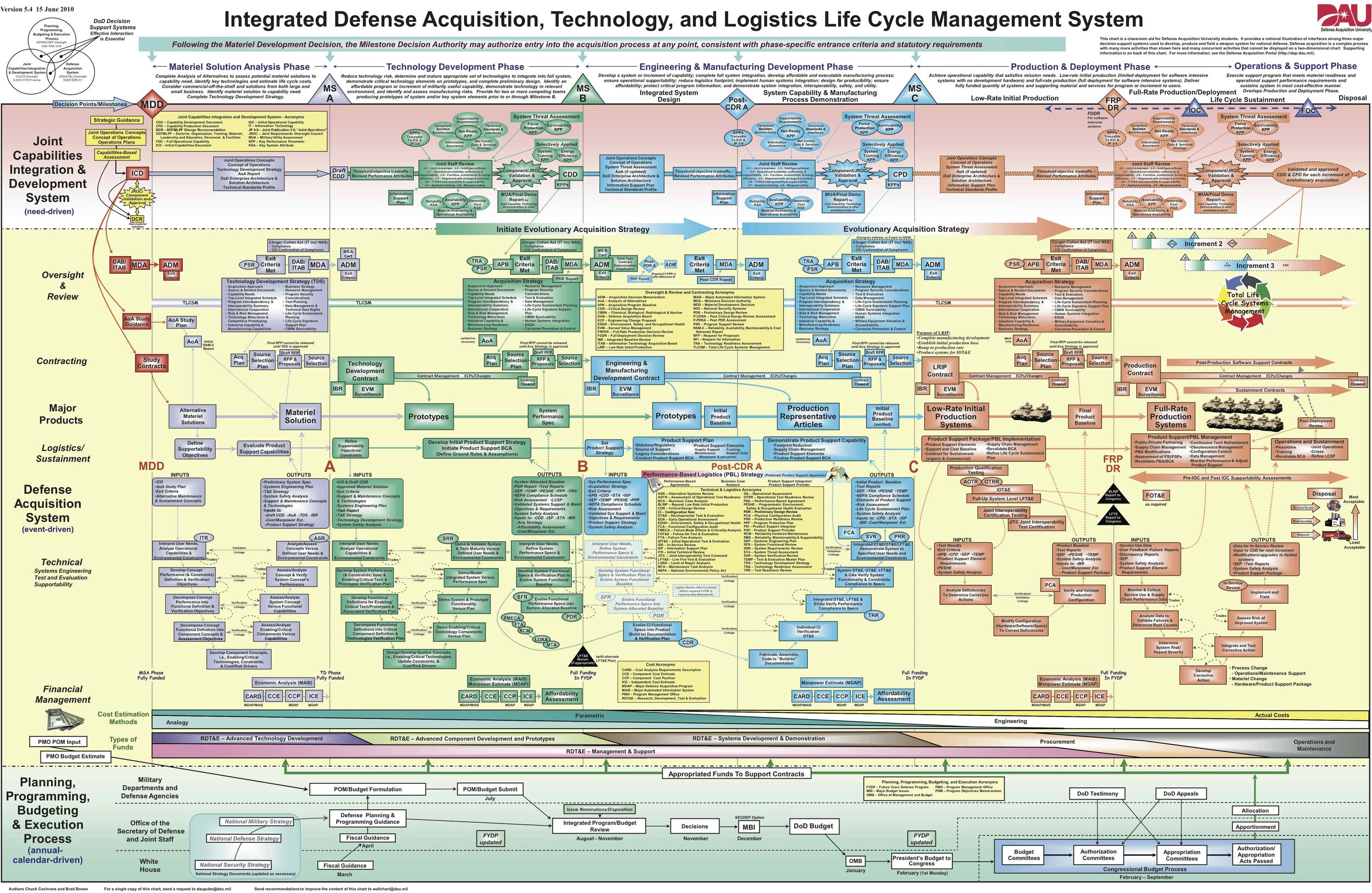
An archetype of garbage in/garbage out arises when the sum of known threats is calculated in a form of analysis that is impenetrable on its own terms. To wit:
Is it so irresponsible, then, to turn off every news feed and go about marshaling whatever energies may be marshaled into the idea of the Beautiful? Not so much out of hedonism or an aesthete’s self-satisfying ardor, but because tuning out and dropping out (exit) achieves a coherence and Hippocratic-oath salience that seems beyond the grasp of engagement (voice). Maybe, maybe not, but responsibility aside, it seems worthwhile to attend to the possibility that the Beautiful also exists in the futile absurd, which can be observed accidentally/in the breach or with a strange kind of intentionality that remains available to the faithless. But is that a kind of keeping faith or just a kind of keeping score? All rights reserved, and more after the commercial break . . .


