Falling leaves you destitute, depraved, & sordidly disorganized


Falling leaves are an October necessity, even if the sun beat down at this upper latitude in a high-80 swoon. This particular bout of introspection afflicting you is bought and paid for by the brain trust at Female Sadness, Incorporated.


The power of a secret is intoxicating. This fact is known on the page by the producers and the editors and the storyboard engineers, and in the blood by the sociopaths and amoralists and the shot-callers. The opposite of the secret - the emergent new category - could be summoned and cosplayed by the cirrhotically inclined copy writers with sleeve tattoos and a November trip to Cambodia and the it girls who, at 28, feel everything start slipping and go white at the thought of being out to pasture. Betwwixt the tongue and the teeth the cool new thing starts to flag and wizen, like a spazzy stabbed krylon balloon at a 2nd grade birthday party.


At least soulless ascent to power has come and gone. We all still can find photographs that have the punctum, even if none exist on the rolls on our own phones. Sometimes a good, vital sense of hatred helps to give that same sense of ripping through the fabric and setting things to rights.

By dint, by inclination, by tendency, by penchant, by disposition, by fate, by unerring determinism


I don’t know that I’ve learned much, but it still seems true that trouble lurks in the thought that to be contradicted is to be persecuted. And lately it’s not a thought, worse, a feeling, rising steady like a tsunami and crashing deadly like a bunker buster.

Even the most homeless of the unhomed have found the Hobsons choice between all these pussified Darth Vaders stewing in their slogans, bile, and vituperative glee and all this unhinged Id with the tats and the dip and the wraparound gaterz, none of which is admissible at the protective order hearing.


By what inevitable degree does bent become inclination, inclination tendency, tendency penchant, penchant disposition, disposition fate? S.E.

I keep forgetting that a fundamental precept of post-world war II American life is that the government, in its functional and theoretical arms and as incarnated in the men and women of officialdom, is always lying and deflecting and covering up. It is entirely possible that each administration of each Presidency in the 21st century committed, or has aided and abetted the commission of, acts that would be viewed as war crimes in the minds of the authors of the Geneva Commission. I keep forgetting about Manufacturing Consent and the all too human proclivity to be able to ignore facts, the acknowledgment of which would turn the lights off and the pantry barren. I keep forgetting about the Saturday Night Massacre and the specter of what wielding power does to intentions. I keep forgetting that situations and scenarios change in the particulars, but human frailty and avarice and the false trail of virtue signaling endures and deepens, extending its capillaries ever deeper into ever darker areas.

And so I amble on through life, afflicted with all this amnesia, trying in the early hours of an insomniac’s early morning stupor not to take too seriously the grandiose self’s insistence that this insight into what this historical moment portends is unique, with all the enigmatic delusions that attach to the idea of uniqueness.


One minute in the skull and the next in the belly. S.B.

Oedipus wasn’t all that complicated really. He keeps living on and on in this enduringly long-lived but essentially false story about fate. beneath it, in the white space and at the margins at the end of declaratory statements, is a better story, told as farce.

Vengeful daughters won’t let the men who killed their fathers be buried, just as vengeful but mortal demigods will drag their vanquished enemy for days behind fast-depleted horses. Alexander uncorked the wine the day after the day he woke to find he had slain his best friend in a blind drunk stupor and halted the army to fire the pyre in mourning.

It’s not complicated unless it pays to be perceived as complicated.


Suppurating heart wound, in a good way. Or in a could-be-worse way

Supposing truth is a woman and also God is a woman (which reframes Mary’s experience, clearly) and that we still have books and binders of women, and anyone reading this understands that some women in the past were not women but gods. Supposition that until next Tuesday as a kind of marinade for framing this consideration. Now: are we finally past the point where women will get behind a woman to serve as the truth and embody the persona of God? To vote for that metaphysics, declare it to be so. Or is that point in the future?


men and women make their own history, but not the circumstances of their own making.

Succession auteur, by way of the 18th Brumaire, said something like this, in accounting for the prevailing view of his Roys. The Rex est regnum but with piss stained rugs and loveless marriages and the variegated spectrum of prostitutes for sex for lucre for power for spite for joylessness - all the things to be sold for.

And if the canon were to specify that from the actual labor and intellection of the toilers and the strivers comes money, for which the toil and the striving are directed, and out of which comes status and opportunity to go to bed with an ideal partner, then does that canon attach to reality at when? At what point is it first weaponized?

To conceive of a way to hate a kind of life that isn’t born from envy or perceived to be.


It’s not clear that fantasy or speculative fiction is any farther or closer than the real politik portraits of the .0000001 percent, at least when it comes to hitting on what is going on and which levers are being pulled to push ever-accelerating history down its current greasy slope. This murky quality is of a piece with not being 23 anymore and not being stricken with the whirl-is-king panic of irreducibility all the way down. So art and volatile relationships or despondent problem drinking or sobriety and cold plunges, but also art. Then maybe some parenting, early onset like dementia or diagnostically elusive like TB.

It shouldn’t be lost on anyone that when the CIA charisma-farmer recounts the boast that “flies would be walking across their eyeballs,” it wasn’t just a desire to project a directionally if not epistemologically closed system, but to reclaim the rightful place of order and comprehensibility and the father who could set things to right in a world in which everything would be ok just wait and see there is a plan even if it is not this plan and not being able to instantiate the plan is part of this plan, which is but a node on a larger one. Just so long as no one comes to see it all as a palimpsest made readable only if held up to a mirror to make these backward ass letters come to resemble themselves in their very difference.

Ripeness is all vs readiness is all

Having not quite completed the annotated study of the Rule of Law as the Law of Rules, with an emphasis on the rhetorical tropes as a funhouse of mirrors, I gave up and read Shakespeare. Tenure could wait, or so I thought.


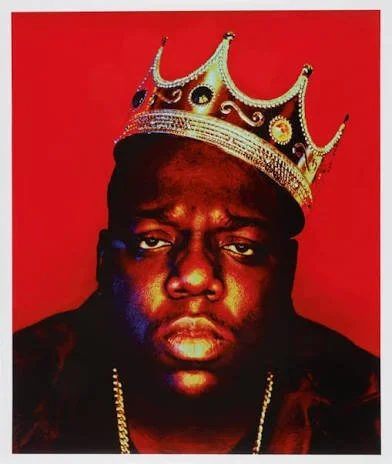
The first reading is what Hamlet meant when he said Readiness is all. It does not, surprisingly, address survivalists or self-help influencers who want to be auteurs. Dying with zero, discipline equaling freedom, stoicism as a daily calendar - cramming Hamlet into that racket proved to visit too much conceptual violence than could be borne. But Notorious B I G and ready to die was a skeleton key text that helped turn what Horatio heard into just the kind of flotsam and jetsam that the book buyer at FSG would find alluring and, even better, sellable as whetting an appetite, a decimated lack from which the masses didn’t know they were suffering.


From there the first reading of ripeness is all fell like meat from a bone of a brisket that a wealthy celebrity enthusiast of wood chip grills and sous Vide cryovac dilettantism might post about. Lear knew what Shakespeare didn’t yet conceive, but eventually birthed, just like Doubting Thomas knew what faint-hearted Antonin so obviously wrote but couldn’t intentionally say or at least could say it intentionally but not mean it: Roll it all back to 1920. Here, of course, Bryan Garner is Cordelia.

Mundis Ex Igne Factus Est, and So What if It Is?

I was writing out le rouge et le noir longhand, word for word, like Pierre Menand, with periodic cramps and vague stirrings of spending the future traveling down a tunnel of carpal. I would break to read Padgett Powell and Dianne Williams and Caryle and watch documentaries about apex predators doing their apex thing.

It could have been cancer, from how my top layer of skin seemed to sizzle without heat and blister but invisibly. It was not cancer, vouchsafed the cancer-detecting professional in five sentences. the derm then shared seven sentences describing a property boundary dispute with his four-stall garage adjacent to his 6500 sq foot home.

I am off the self seriousness. Pulled free of it like an excitable bully dog pulls free from a chain with two weak links and runs to go fight another dog, which found joy and blood and the possibility of everything going awry there. Two sets of bared teeth and snapping jaws. Like the Wolf against the Airedales in The Crossing, when the boy walks up and with mercy in his heart shoots it dead.

I am shooting self-seriousness in stride and with mercy in my heart and then taking aim at knowingness and sentimentalized self-loathing, which is world loathing of a sole solitary self unable to see the world as a bigger, separate, other-containing thing that exists outside of the life being lived in this particular idiosyncratic instance of selfhood.

Point: Human institutions are inherently and invariably fallible, and the more certainty and moral superiority they claim, the more filth and deceit they are likely trying to conceal behind that clean, lofty veneer.

Counterpoint: 404 error.

Freaks and Greeks

Beware of Greeks bearing gifts, and be warned of freaks bearing the 1970s on their inflationary shoulders. Pay due consideration to defaced monuments as to debased coinage.

After Virtue ends by calling for the waiting for Godot to end and waiting for St. Benedict to continue. Doubtless that’s mangled but the point is the waiting and the austerity which which it instructs.

Staring down the incessant run on the prime rate, our forebears in their salubrious American spree waited for Volcker and his pound of cure. Which turned out, in retrospect, to weigh out, in multiples, as spur, then hedge, as taurus looks back toward ursa in its great celestial sparkle.

A terrible beauty is born, we are told, and so we go and search for it, bumping into the calling out of lines unspooling black against white. We strain to see what may come, and in straining come into our strength. Poetry without you equals us, and you don’t like my easy way of claiming “we,” not because it is presumptuous in being wrong, but because in its presumptuousness such wide and consuming shadows are cast.

Do you remember when the anthropologist went down the stairs beneath the tower at the outer edges of the mapped territory and found the wall on which was written so much incantatory gibberish, but the writing was not just a process, but a kind of biological seething, and the anthropologist wanted to hold the gun instead of being held at gunpoint? Maybe some details are wrong, doubtless so - I’m tired and my grasp of the new weird was always tenuous and trending toward unintelligible - but I can still feel the breathing unease that arose alongside the reading of the biological seething that did its own writing, which tended to make agoraphobia look like personality strengths and not just holding off the bughouse at arms’ length.

Sigh. I wouldn’t suppose that

when Achilles with his short sword pierced the breast of Penthesilea
and as usual twisted the blade thrice in the wound, he noticed that

the poles could be translated anew so long as they stood at the axis of creative license and bald, emaciating theft, which created an exile from show trials who could see and hear at least one pole who had traveled back to Ithaca.

I wouldn’t suppose that the honor among thieves is sustenance like flat bread that sours over and over and over, consuming itself and bubbling over.

I think about Bartleby in his copyist’s costume, play acting at refusal until it logically if surprisingly progressed to the sickness unto death.

I think about sleep but bed down with insomnia. Which the 1970s would always understand, for which I am thankful.